Between maintenance mode and execution mode

One of the goodies of doing coaching sessions is that is a constant reminding/learning you get from the coachee. In this case it was about the self-awareness on the current status and seeing yourself as a whole so that you can respond better to your needs.

Maintenance mode

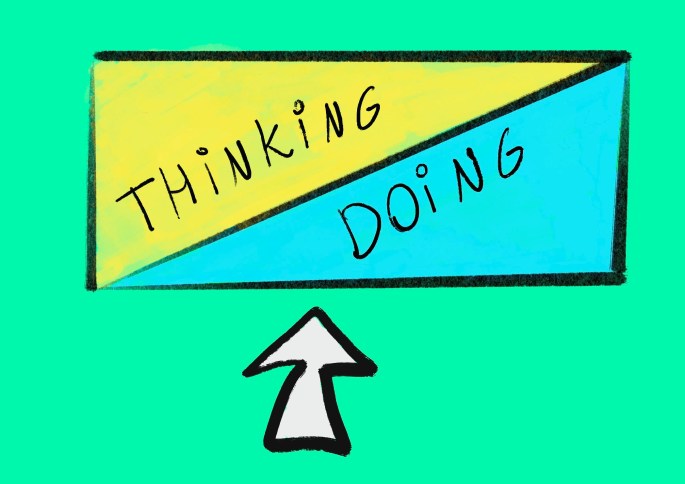
We can say that we are in maintenance mode when we need to focus on ourselves. As you can imagine here there is not much action towards the outside but there is really a lot of work going on internally. Here we are talking about giving ourselves the time needed to process any changes that come into our life, get clarity on the vision, mission and purpose, so that we can come up with an overall better approach by the end.

To sum up here there is no action but we are more focused on the being, who are we being and who do we want to be. Being conscious and intentional.

Execution mode

If maintenance mode is lack of action, execution mode is all the opposite. There are times that we are not looking for clarity, we know what needs to get done, at that time there is no benefit for us on being reflective or strategic. What we need is to jump to the arena and play our move.

Please note that a clear risk of being in ‘maintenance mode’ is getting stuck in the thinking. There is that saying that says:

better done than perfect

And there are times that we want to make it so extremely good that by the end you do nothing. Sounds familiar? 😉

The right balance

We have been learning about what maintenance mode and execution mode is. Now, what is the right balance? Is it a black or white matter? Circling back to the beginning of the post, I believe it’s all about responding to your very moment needs. Here I invite you to listen to yourself. If there was a story about yourself in a book, what is the title of your current chapter?

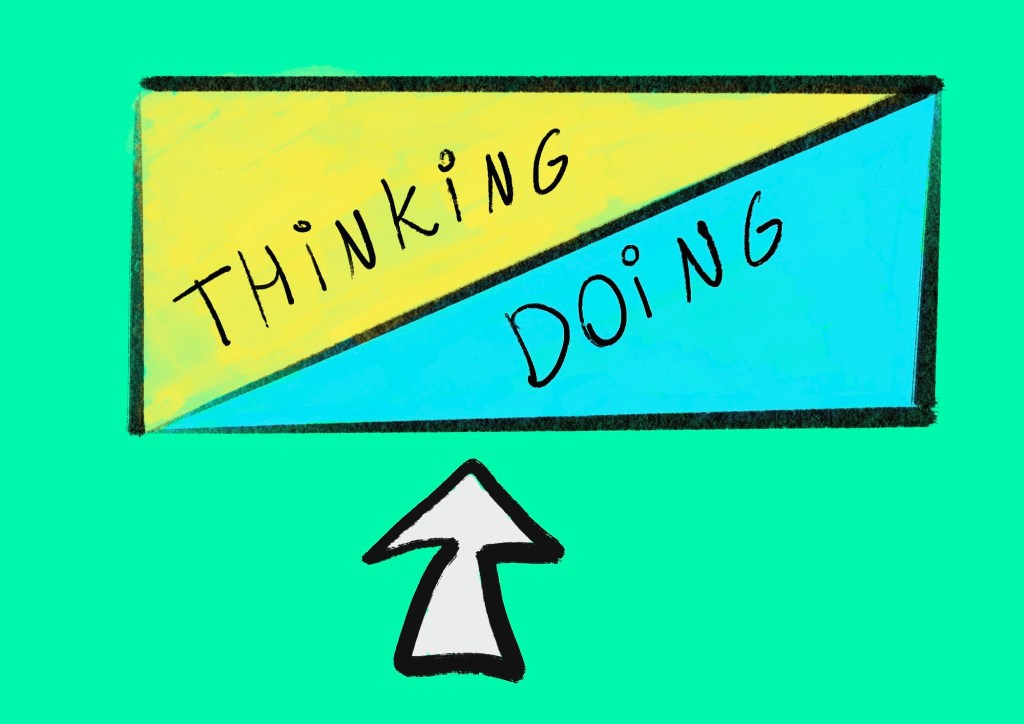
There is really not a better approach than the other. While we are in execution mode we are giving up on being more strategic and smart about the execution and the other way around, while thinking we are not doing. It sort of makes sense to think that the right balance is in finding the inner pace where these two phases complement themselves in an organic way.
My Experience

That was my experience also as a coachee. When defining actions to move forward, I found myself constantly balancing between ‘maintenance mode’ and ‘execution mode’, as if I was walking and each feet represents a different approach.

By the end of my coaching process I adopted the approach of measuring myself weekly and changing the gear as if I was a car. Should I go at top gear next week? Or should I take it easier?

An Invite

Now I invite you to think about it. How should your day today look like? should you be closer to maintenance or execution mode? And next week? And the next year?
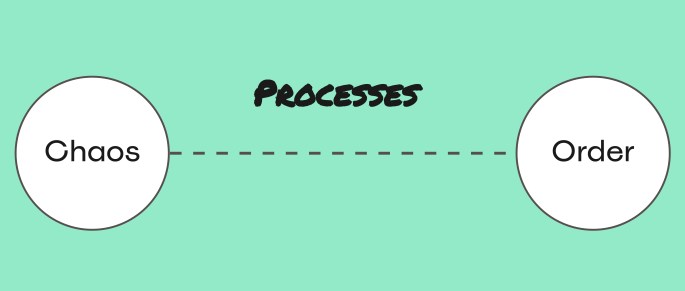
Processes: Between Chaos and Order

What is a process?

A process is any kind of event that takes place with the purpose of giving structure, it could be a document, a meeting, or simply an action among a few individuals with a specific outcome.

When should I review my processes?

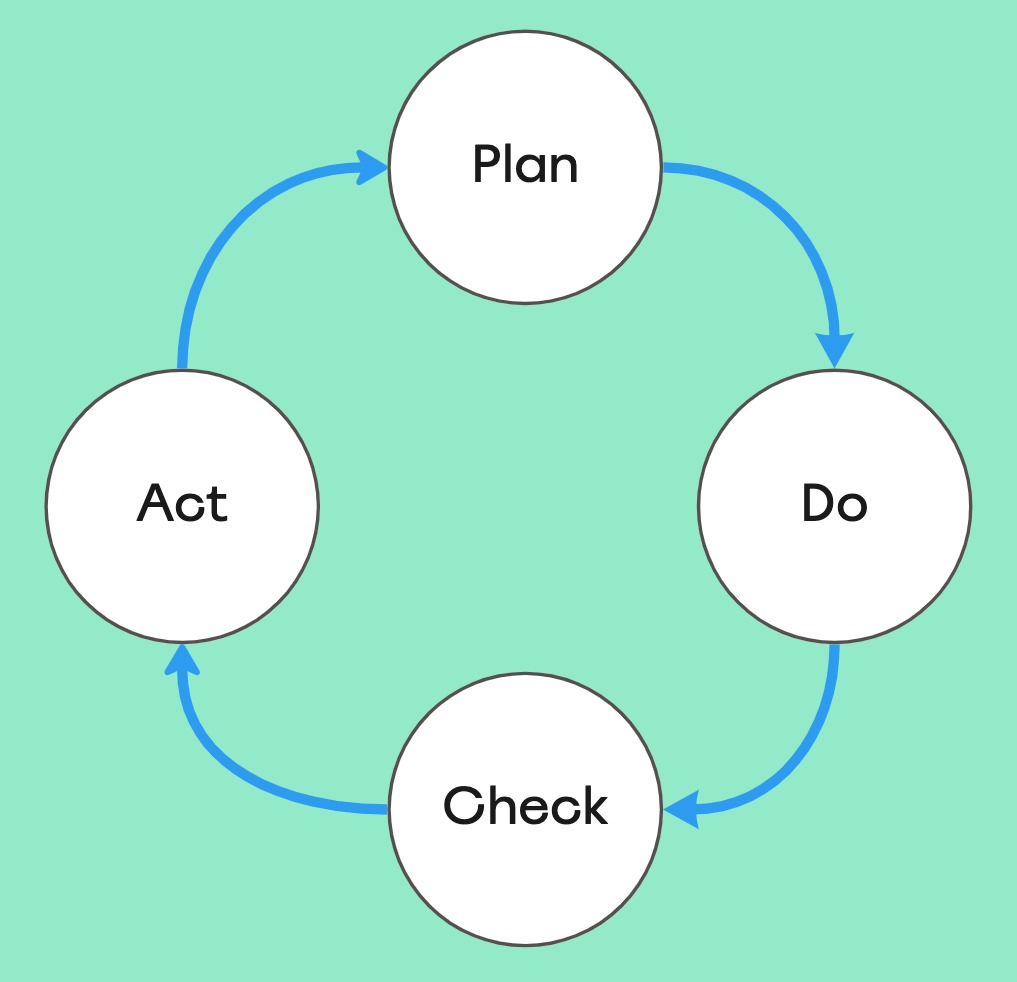
Constantly. Given the self-evolving nature of any organization and their needs, it’s natural to adapt processes continuously. Here I would invite anyone to apply the PDCA cycle based on: plan, do, check and act.

Introducing processes: a delicate balance

Processes come into place to establish order and remove uncertainty. At first sight one may think that of course we want as much order as possible and therefore as many processes as possible. However they come at a cost. Introducing processes by definition will bring constraints and boundaries in all operational aspects, reducing the margin for adaptability and flexibility in the organization. Therefore we need to target the right balance considering:

  • What is it that we are trying to solve?
  • What is the benefit hypothesis?
  • How is it being done right now?
  • What is the buy-in for a change?

For this reason I highly recommend working with more people to brainstorm ideas and come up with better solutions that are tailored to the organizational needs. There is no one for all.

So, how would the processes for introducing processes look like?

  • Problem framing: what is it that has changed? where is the problem? why? let’s make sure we have the full context.
  • Brainstorming: let’s gather ideas to solve the problem and come up with a proposal.
  • Selling: to get organizational buy-in before implementing.
  • Landing: phase where all processes fall into place, can be a sudden change or gradually.
  • Operating: here the process reach its full potential and it’s deeply understood by everyone.
  • Evaluating: here we are in a position to do an assessment and iterate.

In my experience

Between boredom and freedom

I have witnessed how extremely well structured organizations led at some point to boredom and messy organizations came with a feeling of freedom. More than that, it’s proven that teams are more efficient when the right balance between those two extremes is met.

The ‘too many meetings’ syndrome

It’s interesting how in many organizations the same problems or sayings repeat, in this case the ‘too many meetings’ one. Here I would kindly invite to dig deeper: what meetings? and do an exercise where we classify them with their ROI in team members eyes and understand exactly where is the leak in the process so that we can adjust accordingly. Is it in the contents? is it in the format? In the end, no one loves meetings or rules but we need them due to the value they provide.

Help understand the purpose

There are times that teams miss the final goals. It’s never enough of sharing the purpose of a process. A classic one is the daily standup, which only purpose is for the team to sync and not a reporting one. Does it feel natural sharing what you did yesterday? does it bring any new information to your colleagues? if not, skipping it’s fine.

Meet them where they are

Before helping others understand it’s important to understand them in the first place. How are they perceiving their current processes? What is the culture? for any implementation to be successful you need to connect at a deep level before applying any change.

It’s all about value

If we do the metaphor of an organization as a person, I like to think of processes as the brain organ. Certainly we don’t produce while having a meeting or creating a document, at the same time we need that to make sure we are having the correct approach or going into the right direction. And here I invite you to think: is your organization too focused on the thinking mode? or is it running just flat out?

To understand if we are ‘too much’ into one direction or the other, we need to come back to the purpose: how is it helping me deliver more value? We should always be able to answer that question when introducing or modifying a process.

Improving your processes will help you organization achieve increased levels of engagement and efficiency, reaching a higher sustainable development pace.

MeetUp: Company Agility in Action

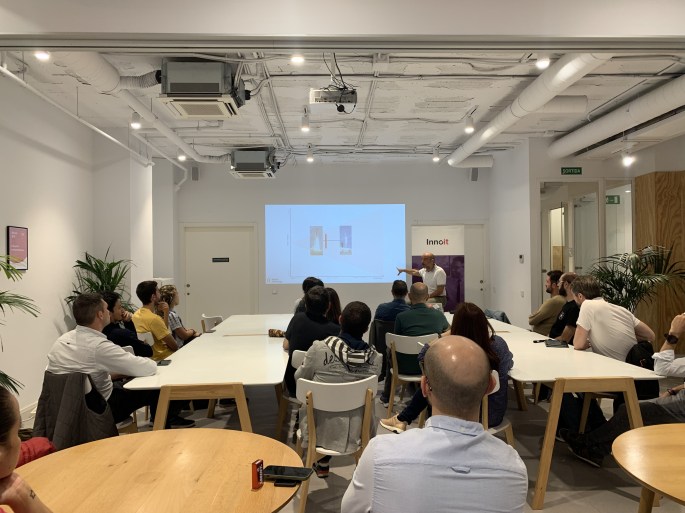
Last Wednesday I had the pleasure to attend a meetup event about agility organized by InnoIT in the center of Barcelona. The goal was to share tools that supported multiple organizations in their agile journey. So, what’s there?

1. Wardley Maps

The Wardley Maps come up as a solution to measure the organization’s capacity to anticipate technological change, demographic change or how user’s preference it’s going to impact us.

If you check out the web page www.learwardleymapping.com you’ll see they have a video that explains briefly what the wardley maps are about. As you can see we categorize each part of our process into the uncharted – industrialized axis, while on the Y axis you can see how we target our purpose strategically.

I found it extremely powerful in the sense that it obligates you to position your product and visualize your business strategy and creates awareness of the weak points and strenghts around it, so that you can adapt better as information emerges.

I really enjoyed this article which explains very well how can you operate based on that framework: https://medium.com/@hendrik_esser/fit-for-purpose-e442b9015ec7.

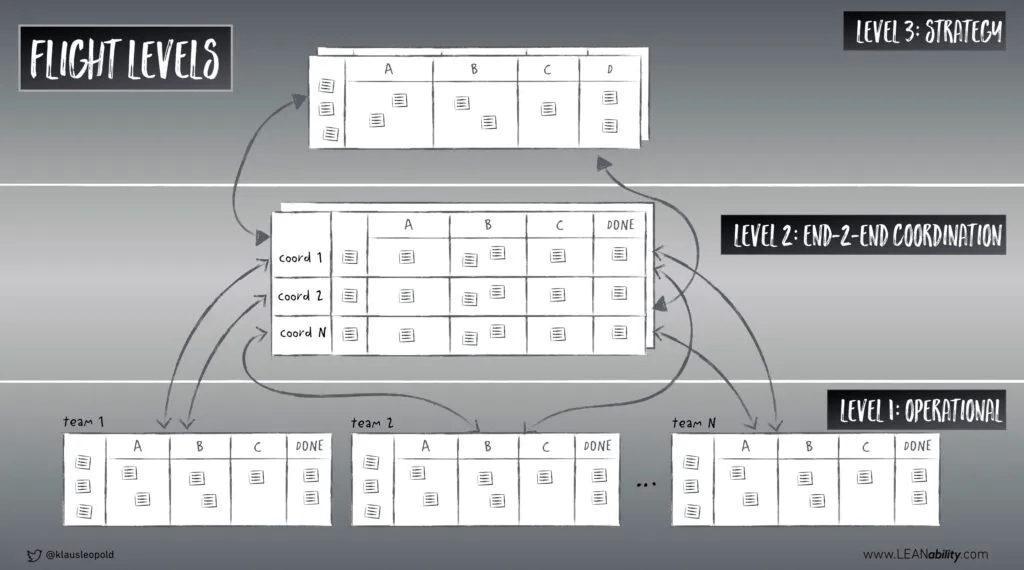
2. Flight Levels

Flight levels come in from the point that ‘agility is not about teams’. What this really means is that it’s more than that. Of course agility it will end up affecting the way teams work, however it should be the starting point, we need to see how agile we are at a strategic and end-2-end coordination level and here is where Flight Levels jump in.

If you are still interested in knowing more about flight levels I would recommend you to watch this video:

And buy this book from Klaus Leopold, as I just did 🙂

3. OKRs

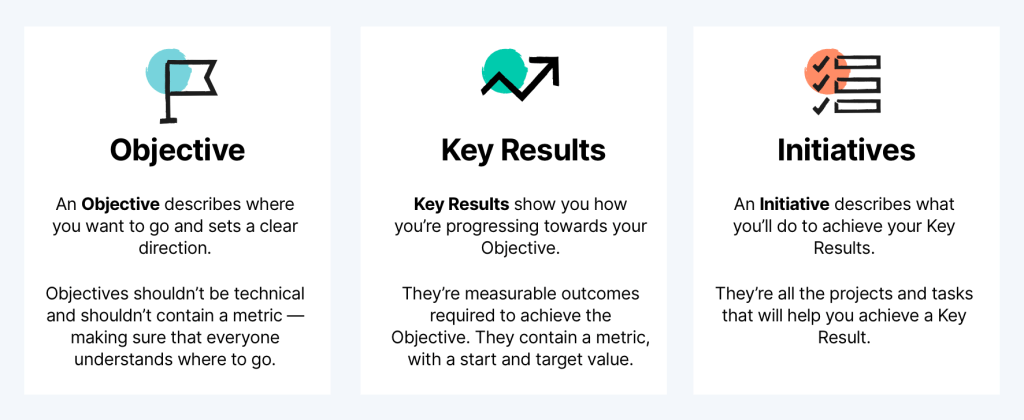
I assume this is by far the best well-known tool from all so I won’t expand myself much. OKRs are meant to set a desired target state and find ways to measure our progress towards it.

In this website you’ll find some practical examples of how it works: www.whatmatters.com

4. EVIDENCE-BASED MANAGEMENT

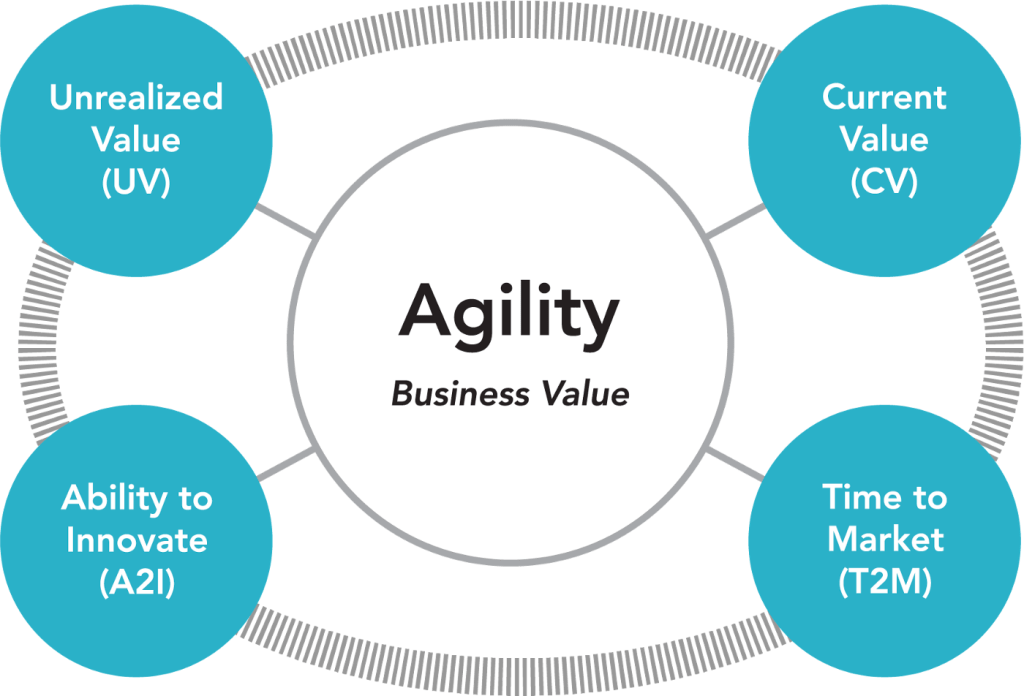
As you can see Evidence-Based Management goes around the idea of focusing on customer outcomes (top axis) and organisational capabilities (bottom axis) to make better organizational decisions.

As you can see in this video:

One of the goals of evidence-based management is to ensure we capture all evidence by following six steps:

  1. Ask an answerable question to help you identify problems or possible solutions
  2. Acquire relevant information or evidence that will answer that question
  3. Appraise the quality of that evidence for its trustworthiness
  4. Aggregate the evidence by summarizing or pulling it together
  5. Apply it to the decision you are making
  6. Asses the outcome of that decision

I think the video explains quite well what the approach is, still, if you are interested in learning more, there is also this book available in amazon.

5. F4P

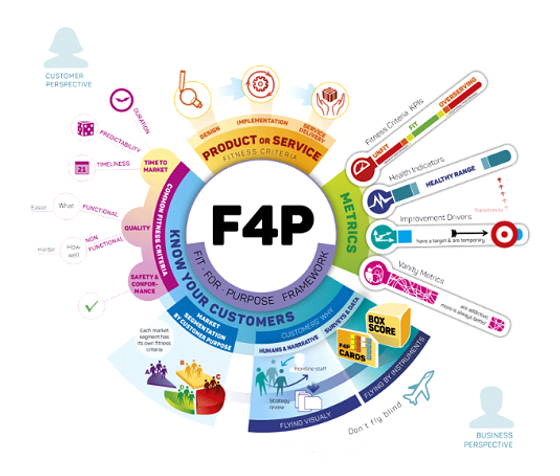
Fit for Purpose goes around the idea that in agile there is no “one fits all”. Here we are looking at our product from different angles:

  • Product
  • Metrics
  • Costumers

And we can go into deep to analyze how well we are performing at each front. An excellent example that they put was that for instance if you go in business class and they are constantly bothering you to offer you things the overall experience it’s ‘unfit’, within the fitness criteria metric.

To be honest it was not straightforward to find a video or explanatory site around the topic. This is the best I could find:

Recommended Bibliography

Summary

The meetup was very valuable to me. To be honest it was the first time I heard about the Wardley Maps and Fit for Purpose framework, plus it allowed me to have a better understanding on evidence based management and flight levels.

It is also true that during a meetup you really don’t have the chance to go deep into any of the topics, putting real life examples and discussing them with the group. Again, I think the goal of the meeting was accomplished which is to share and give an overview of the tools therefore I am grateful I could be there. Thanks Jerome!