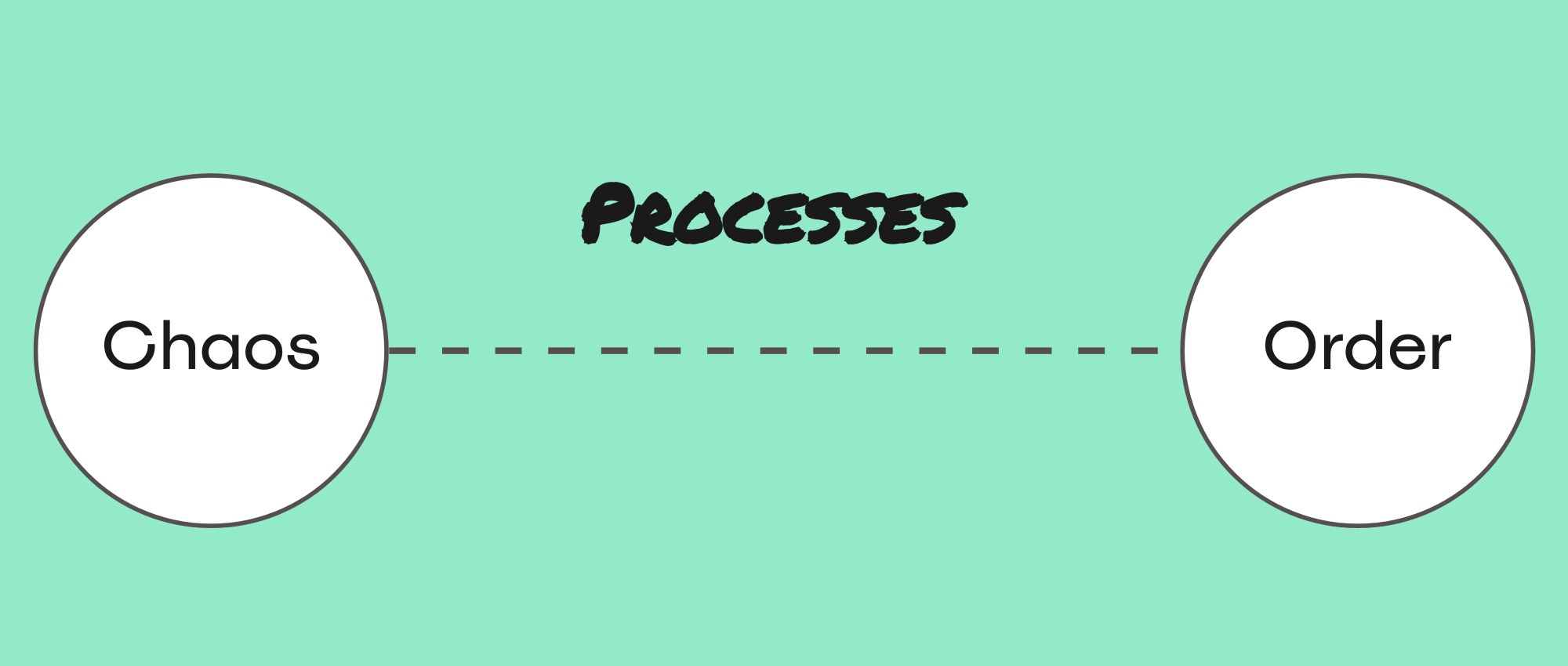
What is a process?
A process is any kind of event that takes place with the purpose of giving structure, it could be a document, a meeting, or simply an action among a few individuals with a specific outcome.

When should I review my processes?
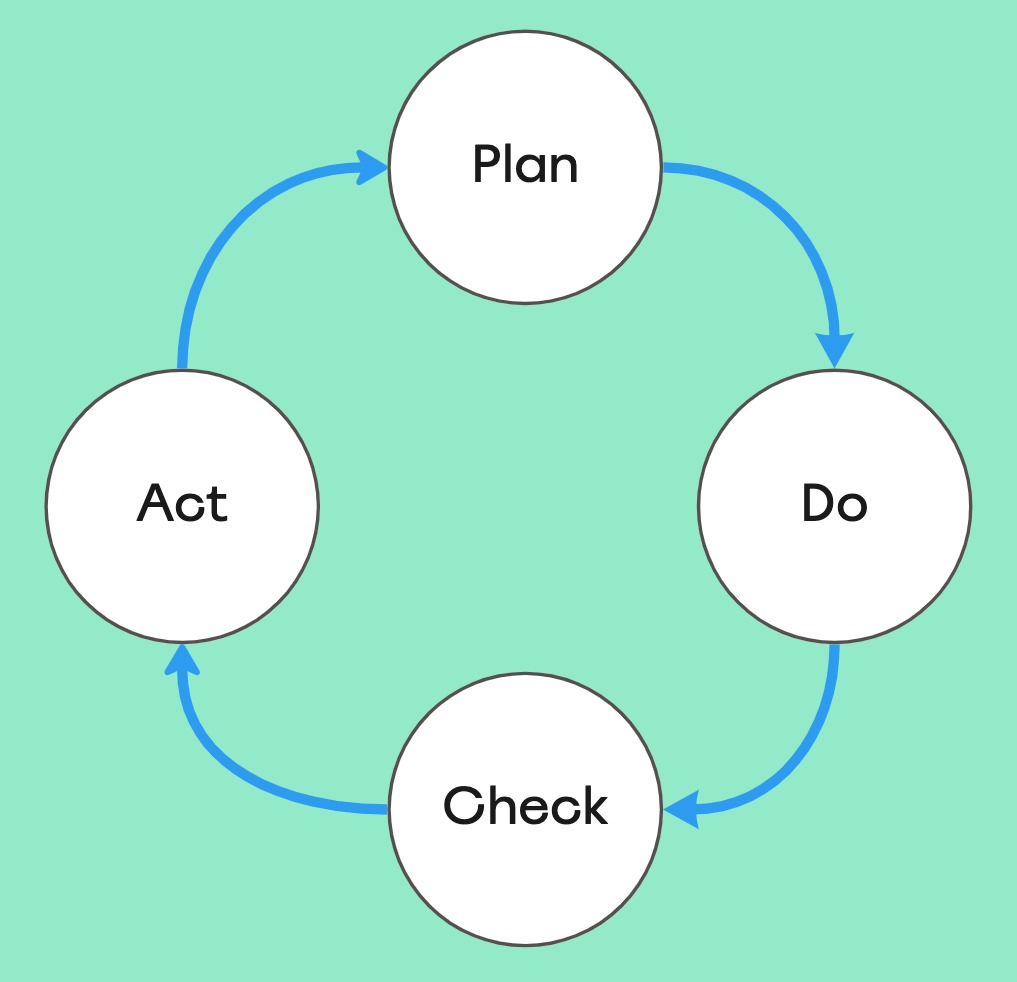
Constantly. Given the self-evolving nature of any organization and their needs, it’s natural to adapt processes continuously. Here I would invite anyone to apply the PDCA cycle based on: plan, do, check and act.
Introducing processes: a delicate balance
Processes come into place to establish order and remove uncertainty. At first sight one may think that of course we want as much order as possible and therefore as many processes as possible. However they come at a cost. Introducing processes by definition will bring constraints and boundaries in all operational aspects, reducing the margin for adaptability and flexibility in the organization. Therefore we need to target the right balance considering:
- What is it that we are trying to solve?
- What is the benefit hypothesis?
- How is it being done right now?
- What is the buy-in for a change?
For this reason I highly recommend working with more people to brainstorm ideas and come up with better solutions that are tailored to the organizational needs. There is no one for all.
So, how would the processes for introducing processes look like?

- Problem framing: what is it that has changed? where is the problem? why? let’s make sure we have the full context.
- Brainstorming: let’s gather ideas to solve the problem and come up with a proposal.
- Selling: to get organizational buy-in before implementing.
- Landing: phase where all processes fall into place, can be a sudden change or gradually.
- Operating: here the process reach its full potential and it’s deeply understood by everyone.
- Evaluating: here we are in a position to do an assessment and iterate.
In my experience
Between boredom and freedom
I have witnessed how extremely well structured organizations led at some point to boredom and messy organizations came with a feeling of freedom. More than that, it’s proven that teams are more efficient when the right balance between those two extremes is met.
The ‘too many meetings’ syndrome
It’s interesting how in many organizations the same problems or sayings repeat, in this case the ‘too many meetings’ one. Here I would kindly invite to dig deeper: what meetings? and do an exercise where we classify them with their ROI in team members eyes and understand exactly where is the leak in the process so that we can adjust accordingly. Is it in the contents? is it in the format? In the end, no one loves meetings or rules but we need them due to the value they provide.
Help understand the purpose
There are times that teams miss the final goals. It’s never enough of sharing the purpose of a process. A classic one is the daily standup, which only purpose is for the team to sync and not a reporting one. Does it feel natural sharing what you did yesterday? does it bring any new information to your colleagues? if not, skipping it’s fine.
Meet them where they are
Before helping others understand it’s important to understand them in the first place. How are they perceiving their current processes? What is the culture? for any implementation to be successful you need to connect at a deep level before applying any change.
It’s all about value
If we do the metaphor of an organization as a person, I like to think of processes as the brain organ. Certainly we don’t produce while having a meeting or creating a document, at the same time we need that to make sure we are having the correct approach or going into the right direction. And here I invite you to think: is your organization too focused on the thinking mode? or is it running just flat out?
To understand if we are ‘too much’ into one direction or the other, we need to come back to the purpose: how is it helping me deliver more value? We should always be able to answer that question when introducing or modifying a process.
Improving your processes will help you organization achieve increased levels of engagement and efficiency, reaching a higher sustainable development pace.
 Xavier Figueras