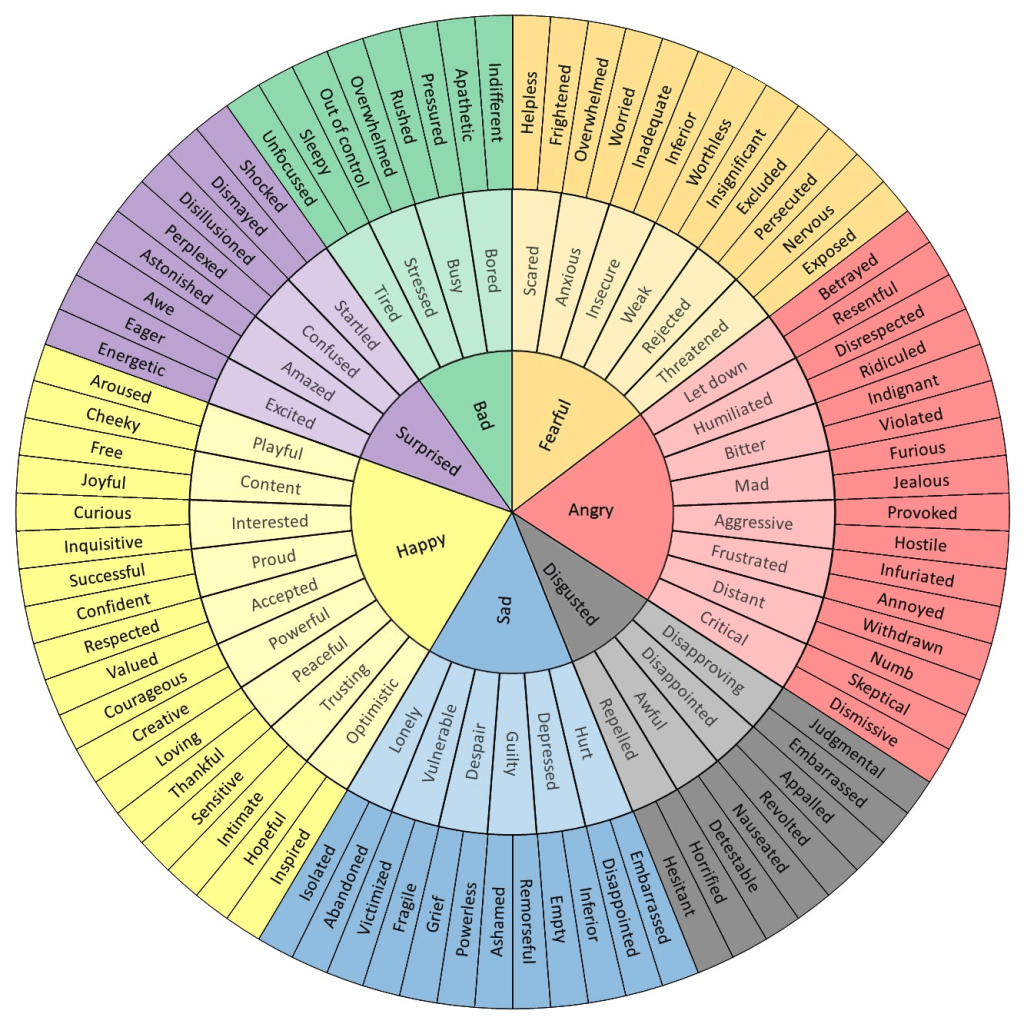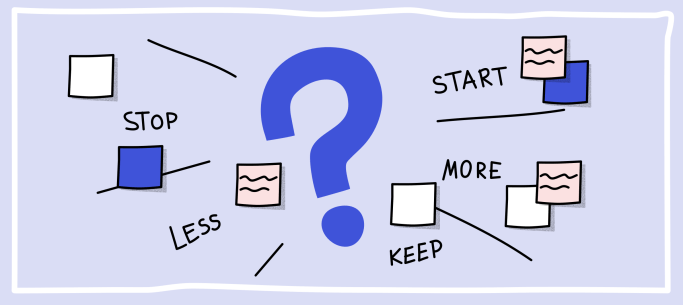
My top 3 learnings for running a good retrospective

As you all know I have been running retrospectives for several years and I can say I had the chance to learn from awesome facilitators during this time. Today I’d like to share with you my top 3 learnings.

Focus on the actions

In the end the success of a retrospective is measured by the quality of the resulting actions. Therefore it makes sense to invest a decent amount of time in discussing them and ensure alignment. A common mistake is to spend way too much time in the problem solving phase, which unavoidably force us to speed up to define the actions.

If in a 1:1 coaching session the recommendation is to invest a 80% of time to discuss issues and 20% to jump to action, in team retrospectives I’d adjust these percentages in the following way:

  • 10% to share the agenda and make sure everyone is present in the meeting (check-in)
  • 60% dedicated to raising problems and discussing them
  • 30% dedicated to action refinement and feedback

In order to get to quality actions I suggest:

  • Less is more: it’s better to leave the room with one good action rather than three regular ones.
  • Do not hesitate using extra frameworks such as effort-value charts.
  • Use the soup retrospective to help the team understand what are the areas where the team can control and the areas where the team can influence.
  • Using the SMART approach (specific, measurable, achievable, realistic, time-based) after the voting session.
  • Measure alignment: making sure we all have the same understanding on what should happen.
  • Have a clear DRI (direct responsible individual) over leaving it to the entire team

FOSTER DIVERSITY

A game changer for my retrospectives was to find ways to bring up the best of what’s already in the room. Based on the believe that wisdom lies within the team, it’s on our interest to make sure all ideas blossom. Everyone has great knowledge on how things should look like, however, when we simply ask “what can be improved?” certainly there are many aspects that can be easily left out.

Ways to foster diversity:

  • Show a video that can serve as a metaphor during check-in phase.
  • Draw the latest iteration.
  • Ask open questions related to the vision: what is the best team you’ve ever worked with? what was present there?
  • Run a previous hopes&concerns session.

You can think of it as giving a lantern to the team and ask them to look left, right or in any specific directions before jumping into a broader question.

ENSURE PRESENCE AND CONNECTION

The hybrid format brought up an underlying problem in many meetings and is that easily we lack the team members engagement at some point during the process. As facilitators it’s on our best interest to make sure to reach high levels of participation so that quality discussions happen.

Since it’s very likely that our colleagues have concerns or out of scope thoughts distracting them, it’s a very good idea to do something to help them be present. Here are some possibilities:

  • “Pass the ball” and just share something quick related to the latest iteration, for instance, a rating from 0 to 10, also metaphors can work wonders here.
  • Do not hesitate using the ‘liberating structures’ (an example here). For instance, it can be a good idea to run a “hopes&concerns” 5 minutes chat with just one of the team members and then bring scale up the group until you reach all attendants. In this way, people will feel aligned an connected.

Summary

Retrospectives are unpredictable in many ways, however, I strongly believe that:

  1. Ensuring presence and connection
  2. Creating diversity.
  3. Focus in reaching quality actions.

Will work wonders to bring your retrospectives to the next level.
The importance of being strategic

Did it ever happened to you that you invested efforts and by the end you did not get the expected outcome? Regardless of our position in the organization it’s always a good idea to have an eye view on what is going on, so that we can pull the right triggers to achieve the desired result. Furthermore, being aware of the cost of opportunity in everything we do will help us prioritize and make an efficient use of our time.

How to reach a certain goal?

Let me share with you the GOATA approach. Being strategic is all about mastering the how we reach a certain goal. If we do a breakdown it would look like this:

  • Goals: what is it that we are trying to achieve? what is the vision?
  • Objectives: what are the steps that will lead us to that goal?
  • Awareness: where are we playing? what is it that has changed? what is it that can help us?
  • Targets: How do we measure our progress?
  • Application: what are the actual actions in place?

AN EXAMPLE OF BEING STRATEGIC

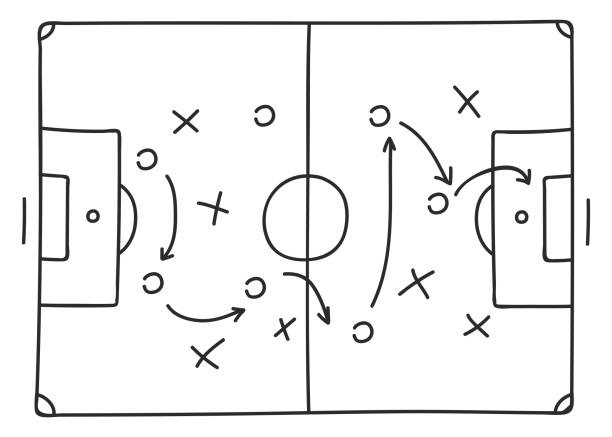
Sports provide a very visual example on what being strategic means. In order to make the most out of it, we need to get eyes on the overall game, seeking our best next move, so that we can maximize opportunity and generate impact quickly.

Since images matter more than words, here is an example of how a few professional football players score versus 100 kids:

Keep it healthy

Once we get multiple tasks it’s easy to fall into the hard-working or action mode, however, I invite you to think twice before rolling up your sleeves. Running flat out might bring you some quick wins but will be detrimental in the long term. Your goal is to achieve a healthy sustainable working pace that aligns with your inner balance with your hopes and needs.

Work smart, not hard, my friend :)

Product Roadmaps – Book Review

Here you can find attached my learnings from ‘Product Roadmaps Relaunched – How to set direction while embracing uncertainty’.

What is the book about

Written by:

A good product roadmap is one of the most important documents of the organization, as it helps align stakeholders around product goals, giving a visual representation of a strategy. ‘Product Roadmaps’ comes to provide a detailed summary considering all aspects to be considered when designing one.

This is a book mainly addressed to product managers, but also useful for other roles who need to take care of the roadmap in order to communicate and manage expectations.

wHAT i LIKED ABOUT THE BOOK

  • It consistently works on the mindset behind product roadmaps. Stating clearly that a roadmap is not a project plan. Plus it goes to the why, talking about the importance of aligning it with the company’s vision and mission. The book explains how the themes and subthemes of our roadmap need to relate to the objectives that will in the end push toward that product vision.
  • The holistic approach when defining the contents of the book makes it a very well-rounded book. Plus it makes it easy to collect ideas fast with minimal effort. You can perfectly skip some pages and still get a lot of value out of it. Its combination of tools with ‘light theory’ provides a healthy balance that makes this book compatible with experimented experts and also beginners in the product management world.
  • The format is extremely friendly. It clearly aims to cover many user cases so that you can get the answers that you are looking for, and it makes it with images, charts, tables, etc. It makes the book very clear and easy to read.

What I disliked about the book

  • Although I understand that the product roadmap is quite a broad topic by itself, the way the contents are distributed around the book feels quite random. It would be nice if the authors had found some way to make it a bit more sequential. For instance, chapter 3 ‘gathering inputs’ could have been followed by chapter 8 ‘achieving alignment and buy-in’, and later on chapter 7 ‘prioritizing with science’.
  • At some point, I believe this book is not pragmatic enough when not mentioning at all engineering or the actual development teams, who are the ones responsible for making a technical assessment and setting expectations in the first place. I would have appreciated greater clarity on how all parts contribute to the roadmap rather than focusing on the product side only.

Summary and rating

This book handled multiple aspects of the roadmap in a very detailed manner, covering delicate topics and considering the different stages from ideation to the actual roadmap plotting. Clearly written and to the point, it’s a book that almost anyone can benefit from, however, I would have appreciated a better index and a natural involvement from the development side when defining a roadmap. If roadmaps are an interesting topic for you and your everyday life, I totally recommend this book.

Rating 4/5