Agile Game Development – Book Review

The Game Production subject I teach ‘Game Production’ at TecnoCampus as College Lecturer it’s based on a book called ‘Agile Game Development’. Here you can find my thoughts on it.

What is the book about?

The scope of the book it’s quite broad: starts sharing a historical perspective on how the game development has changed over time, explaining the impact agile had in the game industry and constantly relating to the experience of the author: Clinton Keith.

For those who are getting started into agile, ‘Agile game development’ offers a deep introduction to elemental agile related aspects such as the methodology (scrum, kanban and lean) and the product backlog, all of it in a gaming context.

Clinton Keith did not only stick to the basics in this book. He went above and beyond explaining how self-organized teams look like, how to scale agile, and gave an introduction to agile best practices such as extreme programming.

What I liked about the book

  • Undoubtedly the top takeaway from this book is the multiple examples it offers putting agile into the game context. Not only from a artefact perspective (user stories and roles) but also exposing usual production mistakes and how agile helps preventing them.
  • Its all-in-one approach it’s very adequate if you are getting started as producer. If you are experiencing ‘first time’ challenges, this book will most likely solve your questions.

What I disliked about the book

  • The book chapters are not synthetic enough. By trying to cover all possible ‘use cases’, it fails to communicate clearly the final message. I believe other books like ‘The Agile Samurai’ and ‘Agile Coaching’ can help you understand the exact same concepts in a much more concise and better structured way.
  • Not all chapters are treated with the same depth. I could not find the level of detail observed in scrum and user stories when going through the self-organized teams and scaled agile parts. This is a book that could have been easily divided into many, giving a more balanced level of detail.
  • Mixing concepts with examples of what not to do. Although I understand the good intention behind sharing personal experiences, at some point it turns out confusing and do not add value when those experiences relate to bad practices. I would have appreciated a ‘this is the theory’ and ‘this is how it’s done’ simpler approach.

Summary and rating

In spite of its complexity and lack of conciseness, it’s all-in-one approach and its multiple game related examples, make of this book a unique partner for anyone who wants to get started in any of the aspects related to agile game development. If you are already an experienced producer, I would recommend you to get specific books specialized on your topic of interest.

Rating 3/5

ABCD Trust Model

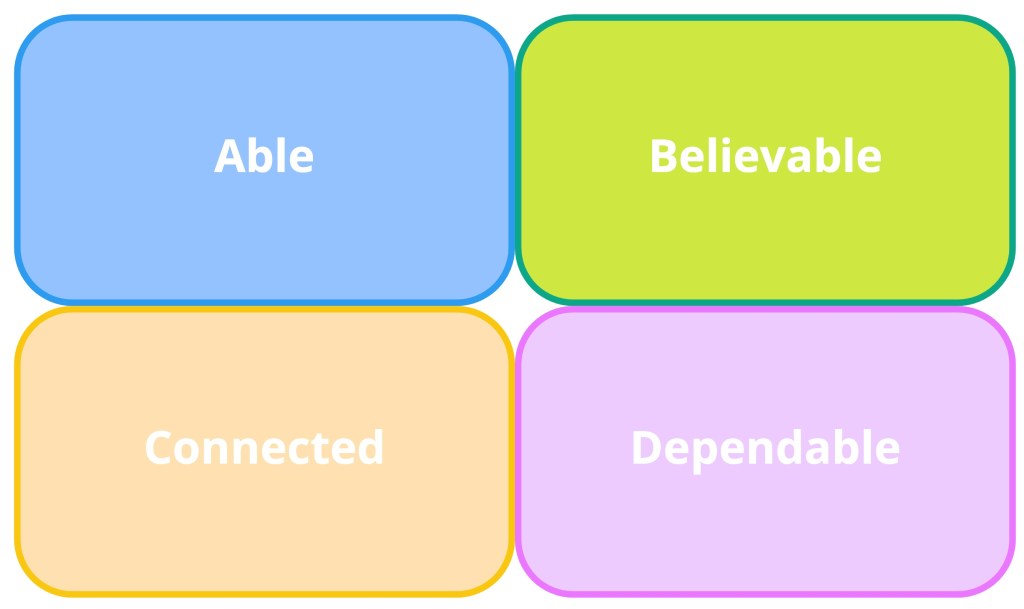
Designed by Ken Blanchard, the ABCD trust model sets out the four elements of trust that are critical to creating and sustaining trustful relationships. They are the following ones:

Able – Demonstrate competence. Leaders who are able earn trust by solving problems,
getting results, and using their skills to help others achieve established goals.

Believable – Act with integrity. Leaders who are believable earn trust by being honest and sincere, showing respect for others, keeping confidences, not talking behind people’s backs, and admitting their own mistakes.
Connected – Care about others. Leaders who are connected earn trust by showing
interest in others, asking for input, listening, showing empathy, praising others’ efforts, and sharing about themselves.
Dependable – Maintain reliability. Leaders who are dependable are organized, timely,
accountable, and responsive to requests; they do what they say they’ll do and consistently follow up.

Ken believed that by taking care of these 4 key aspects, we’ll be building a trustworthy relationship.

An Application

Personally I come back to the ABCD trust model every time a leader asks for feedback. In fact, we were even using it as part of an assessment tool during my stay at Roche. What we did was to break down each of the elements into 7 questions or statements. Some statements related to ‘connected’ would be:

  • Listen well
  • Praise others’ efforts
  • Show interest in others
  • Ask for input

In total we had 4 elements x 7 questions per element = 28 questions. If that’s too long for you, you can always cut a few and keep the most relevant statements for each element.

In any case we’ll get to cover the most important aspects for any leader in a relatively short time, therefore the return on investment (ROI) it’s high.

CONCLUSION

As you can see the ABCD Trust Model comes as a powerful and easy to remember tool that can be pulled at any time, responding to important questions that will bring the relationships to the next level.

Want to try it out? If so, if so, please let me know how it goes!

Leap – A Coaching Event (06.08.22)

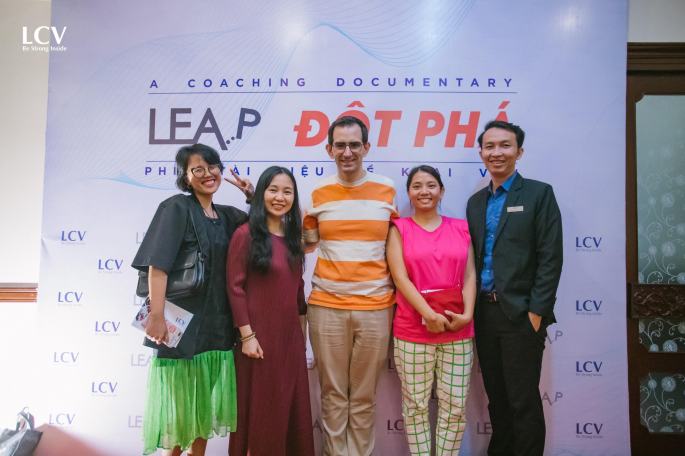
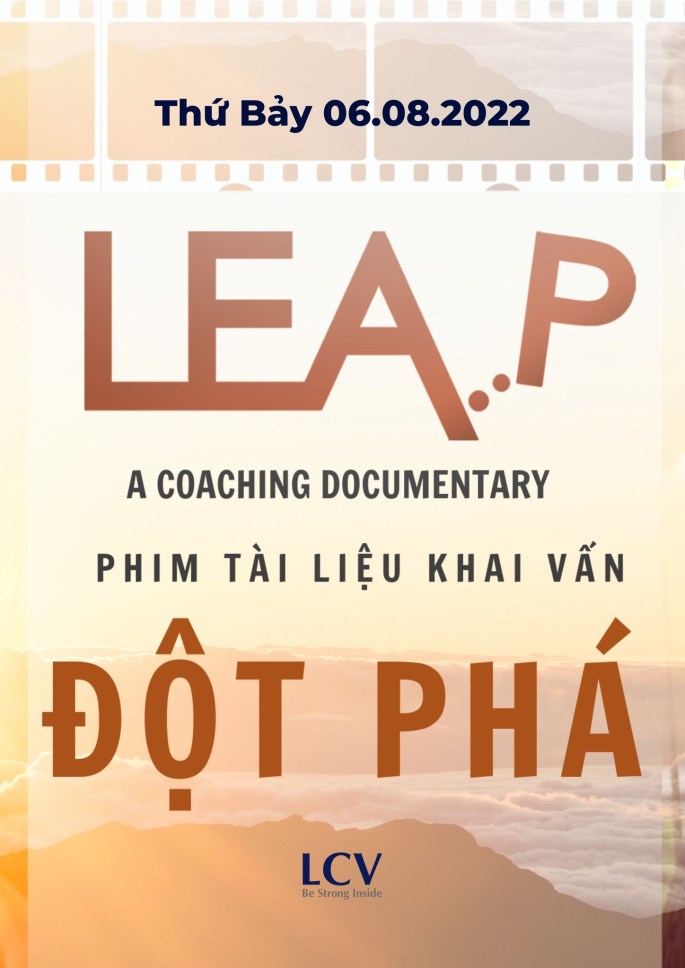
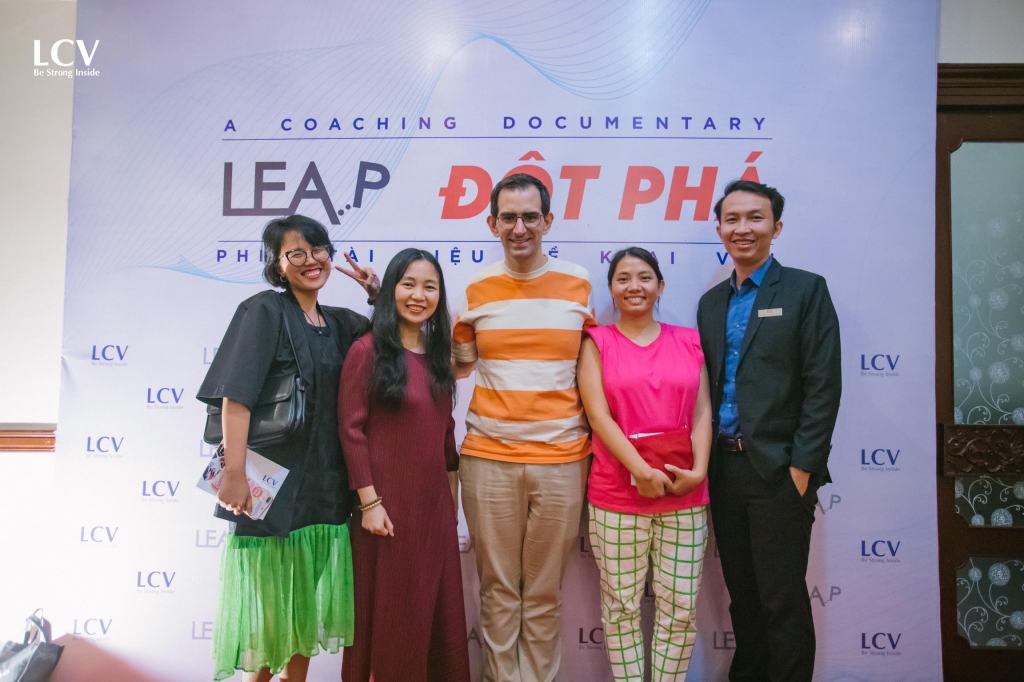
Last week I had the opportunity to attend a coaching event in Ho Chi Minh City (Vietnam). The event was organized by LCV, the leading coaching entity in the city, and the goal was to display a coaching movie documentary named Leap plus have time for a Q&A.

Leap – The Movie

The movie was about 4 people who are accompanied by 37 top coaches over a year. During the movie you can see how each of the protagonists live their coaching process, transitioning to a new phase through powerful questions. Here you can see the trailer:

Some of the questions displayed in the movie were:

  • If you believe in yourself, what difference would it make?
  • What does moving towards your goals feels like?
  • Who is that voice that tells you ‘don’t do that’?
  • How can you let go of the past?
  • How can you make peace with what is right now?
  • What I hear is a defense mechanism. What are you defending?
  • What for you feels more urgent?
  • If a miracle happens and you can overcome any challenge, what advice would you give to yourself?
  • What does “vision” mean to you?
  • At your last breath in life you are given the opportunity to travel in time and come to you today. What would you say?
  • When do you want an answer?
  • You are game changer, what game are you changing?
  • What is more important, the vision or the fear?
  • When are you going to stop being afraid?
  • Are you willing to do whatever it takes to make that vision reality?
  • What do you need to change in order to succeed?
  • In what direction would you pursue that ___ ?
  • What is your greatest fear?
  • What do you need to forgive?
  • If it’s not now, when?
  • What is this <action> gonna mean for you?
  • What is the intent? Make it better!
  • What do you need to go to the next level?

Besides that questions, there were a few memorable moments like when the coaching uses the ho’oponopono practice, explained in more detail here, or when the coaches change their hat to the consultant or mentoring role to give a better guidance to the coachees once in action.

One of the quotes during the movie was:

“Confidence grows when you take a risk and you survive”

To be honest, it was a lot of fun! 🙂

Q&A

In the Q&A the leaders clarified in what circumstances it can be interested to mix roles such as coaching, mentoring and consultancy. They also remarked the effects of coaching embodiment over time. The more they were coaching and listening, the less of speakers they became, and more authentic they were in their daily life.

“Be blind, my friend.”

Summary

It was a great opportunity for me to get to live the coaching vibe in Vietnam. As expected, I could spot some cultural differences, at the same time I could see no difference when it comes to the essence of coaching, based on curiosity and empowerment. Looking forward to learning more about LCV and LCV coaches.

Special thanks to my friend and coach Ly Luu, for inviting me to the event and being an excellent translator.

No Rules Rules – Book Review

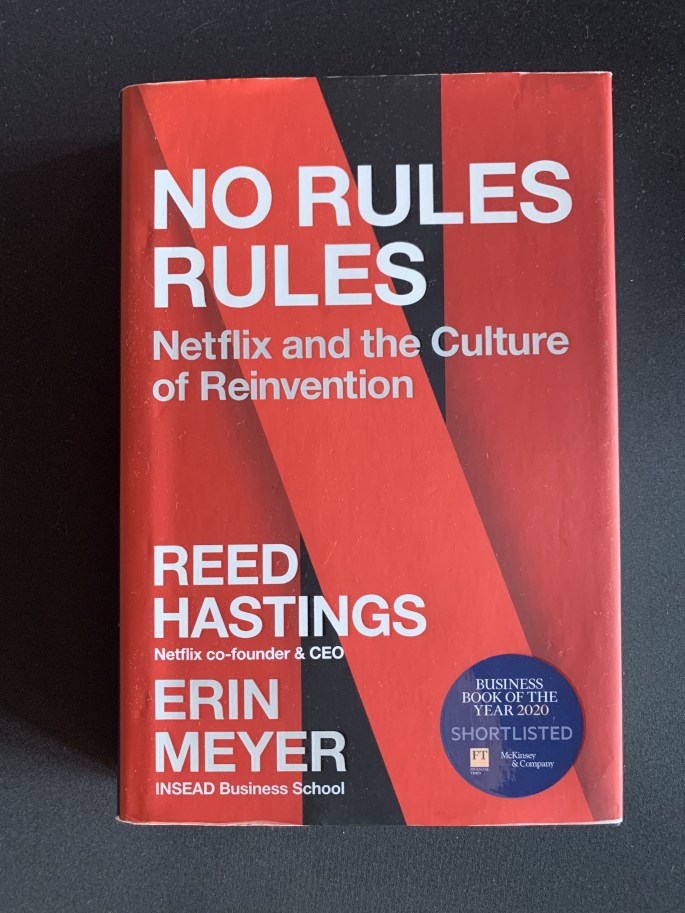
In this article I am sharing my learnings after reading ‘No Rules Rules: Netflix and the culture of reinvention’.

What is the book about?

In this book Reed, Neftlix CEO, introduces us how he set the ground for success to create an innovative culture. After seeing how companies such as Nokia, Blockbuster and Kodak failed to innovate, Reed tried a radical approach, and its success story it’s a source of inspiration to many other companies nowadays.

The book co-author, Erin Meyer, is well-known for her work in the previous book ‘The Culture Map’, which has also been remarkably successful, and brings this ‘No Rules Rules’ to the next level with her cultural knowledge background.

What I liked about the book

  • The book consistently highlights the pros and cons of each decision that was made and the context where it’s useful. So it’s clearly not a one-for-all approach, and it makes it easy for you to understand whether the strategy he adopted can fit into your organization needs. Still there are many points that can come useful to any culture, such as the initiatives and feedback framework, which the book exposes consistently through multiple examples.
  • I like the well-structured approach, separated by phases where each phase connects with the next one in a very logical way. Starting by creating the talent density, continuing with the team dynamics, and eliminating controls gradually.
  • I got plenty of learnings such as ‘seek to please the business goals, not your boss’. The live 360 feedback and the importance of honest communication from the company perspective, although it can come though at times. Last but not least, how to make of your organization a jazz band where anyone can shine and bring what’s best for the business at any moment.

What I disliked about the book

  • Although I liked it’s structured approach, reality can come a lot more simultaneous and chaotic, more if you are part of a big organization, at some point the book seems to dismiss that part.
  • At times the book can feel ‘excessively positive’ as the number of success stories overcomes the number of challenges broadly.

Summary and rating

After reading it I must say it’s the best book I’ve read during this year, so I totally recommend it to anyone who is looking to get a deeper understanding on how to foster a more innovative environment.

Rating 5/5

I consider the points to improve very minor.