One of the goodies of doing coaching sessions is that is a constant reminding/learning you get from the coachee. In this case it was about the self-awareness on the current status and seeing yourself as a whole so that you can respond better to your needs.
Maintenance mode
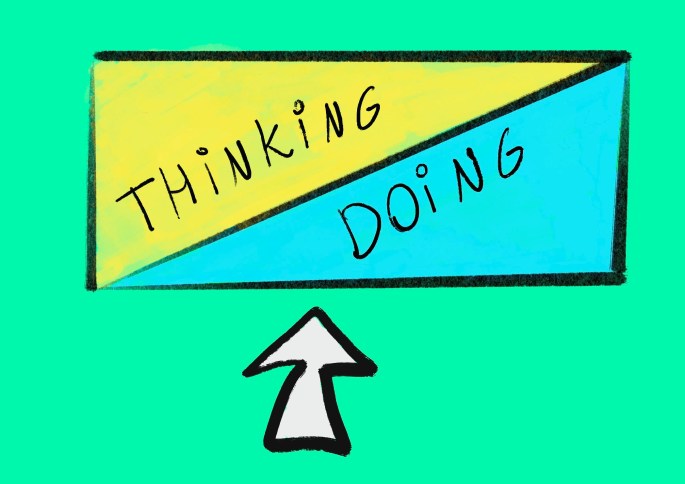
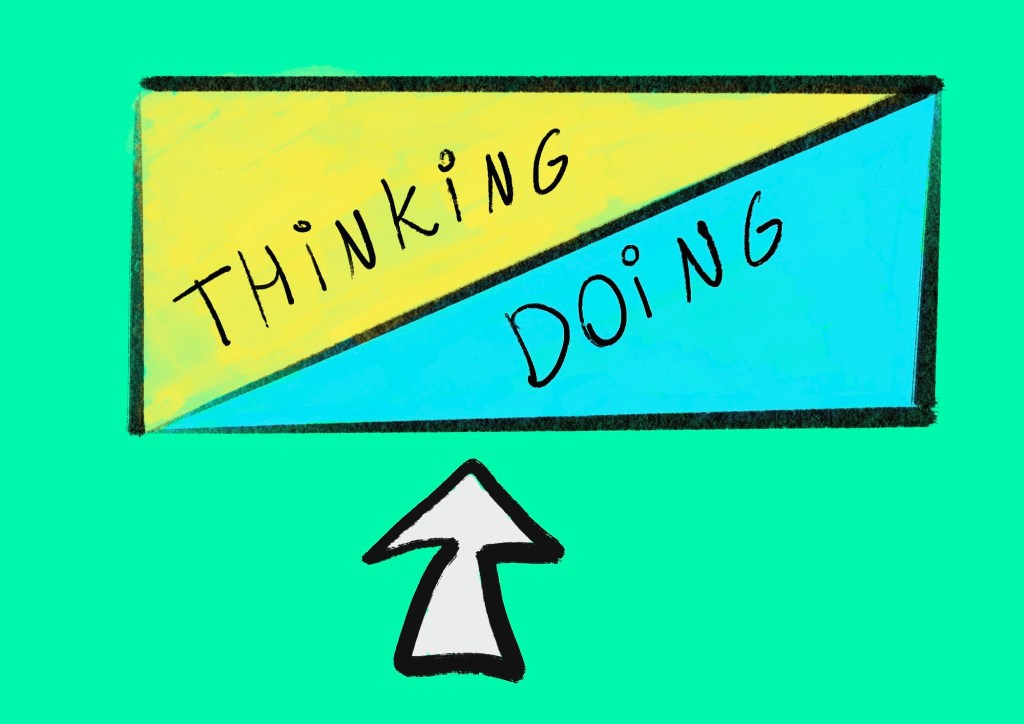
We can say that we are in maintenance mode when we need to focus on ourselves. As you can imagine here there is not much action towards the outside but there is really a lot of work going on internally. Here we are talking about giving ourselves the time needed to process any changes that come into our life, get clarity on the vision, mission and purpose, so that we can come up with an overall better approach by the end.
To sum up here there is no action but we are more focused on the being, who are we being and who do we want to be. Being conscious and intentional.
Execution mode
If maintenance mode is lack of action, execution mode is all the opposite. There are times that we are not looking for clarity, we know what needs to get done, at that time there is no benefit for us on being reflective or strategic. What we need is to jump to the arena and play our move.
Please note that a clear risk of being in ‘maintenance mode’ is getting stuck in the thinking. There is that saying that says:
better done than perfect
And there are times that we want to make it so extremely good that by the end you do nothing. Sounds familiar? 😉
The right balance
We have been learning about what maintenance mode and execution mode is. Now, what is the right balance? Is it a black or white matter? Circling back to the beginning of the post, I believe it’s all about responding to your very moment needs. Here I invite you to listen to yourself. If there was a story about yourself in a book, what is the title of your current chapter?
There is really not a better approach than the other. While we are in execution mode we are giving up on being more strategic and smart about the execution and the other way around, while thinking we are not doing. It sort of makes sense to think that the right balance is in finding the inner pace where these two phases complement themselves in an organic way.
My Experience
That was my experience also as a coachee. When defining actions to move forward, I found myself constantly balancing between ‘maintenance mode’ and ‘execution mode’, as if I was walking and each feet represents a different approach.
By the end of my coaching process I adopted the approach of measuring myself weekly and changing the gear as if I was a car. Should I go at top gear next week? Or should I take it easier?
An Invite
Now I invite you to think about it. How should your day today look like? should you be closer to maintenance or execution mode? And next week? And the next year?
If you research on the topic you will notice that there are multiple coaching courses and related stuff such as NPL, agility, etc. You may wonder: “what is the first step?”. According to experts who have been taking many courses, they all recommend to first lay the foundation by taking an introductory coaching course, which will serve you as a starting point, plus it may cover significantly what can be taught in many of the other specialities somehow.
International coach federation
One of the first things you will notice when looking for coaching courses is that many of them will show that they provide ICF certification. ICF stands for International Coach Federation and in their website you can easily find trainings to become a coach: https://coachfederation.org/.
Please note that third party training providers will require an ACTP accreditation in order to provide ICF trainings, which is another term that you will see when checking for courses. Here you can find the ICF trainings page, in case you are interested to learn more.
In Spain we have ASESCO, which stands for “Asociación Española de Coaching”, you can also find it when checking for courses.
AN IMPORTANT QUESTION
An important question before moving forward is: "are you looking for individual coaching or team coaching"? I am asking this because some of the courses will be oriented to individuals, while many others will be oriented to teams coaching. In any case there are 2 things that are true:
Many coaching schools will target both approaches with multiple courses.
Whatever you learn in one of the approaches, you can apply it to the other one.
To simplify the information, I’ve structured this post in two parts: individual coaching and teams and organizational coaching.
Individual coaching
There are multiple individual coaching methodologies and schools. They all share a common background. Here I will refer to co-active, which is the one I did.
Co-Active Coaching
If you are curious about what does Co-Active Coaching mean, you can find one of the best definitions in the book: Co-Active Leadership: Five Ways to Lead by Karen Kimsey-House and Henry Kimsey-House.
“At its most basic, Co-Active means simply “being in action…together.” Or perhaps it might be more appropriate to say “being together…in action.”
As the pace of our lives has quickened, we have become increasingly action-oriented and results-driven. It seems expedient to dispense with all the “soft” stuff (being) and instead just push to “get the job done” (doing). Unfortunately, this leaves us feeling disconnected and desperate for meaning and belonging. We wind up with what we might call “the hamster wheel” experience of life, as we run around alone in circles, desperately trying to get things done, only to find ourselves right back where we started.
This is why it is so important to begin with the “Co.” Action arising from this place of being and receptivity is whole and integrated, rather than disconnected and driven. In order for us to experience life as whole, action must be grounded in being, in our sense of connection to a larger wholeness.
When the Co and the Active go together, the action of our life is nourishing and fulfilling.”
NLP refers to Neuro-linguistic programming. NLP could be defined as the methodology that allows us to unleash our inner potential so that we can bring change to life in our lives. A further and greater definition can be found here.
In this category, we can usually distinguish three training levels:
NLP Practitioner: basic theory and practical experience to understand and use the PNL methodology in the areas of human behaviours and abilities in general.
NLP Master Practitioner: This course contains 100% new information, and builds on top of your already existing skill set learned in NLP Practitioner. This training will provide you the most powerful NLP techniques to become an effective life coach.
Trainer’s Training: here you will learn and practice the techniques to teach any theory or practice efficiently using PNL tools.
NLP Programs
Instituto Neuron
Based in Barcelona with great reputation, leaded by Allan Santos and Alex Roca. For those who doesn’t know him, Allan Santos is an international reference with great knowledge and expertise in PNL. He has published the books “El Libro Grande de la PNL” and “El Camino Hacia Uno Mismo. Una Introducción Práctica a la PNL“. You can find the courses they offer here.
Global NLP Coaching
Based on Amsterdam, Bali, Los Angeles and Miami Beach, provides one-week on-site trainings. Very well detailed. Link here
Shiny Unsal
ICF Accredited online and on-site trainings licensed by Richard Bandler, co-creator of NLP. More information here.
ENEB
Probably not the best one but still worthy considering as an online choice. Check the link for more details.
Crearte Coaching
Certified by American Union of NLP (AUNLP), Crearte Coaching offers a great amount of courses related to PNL, coaching, leadership, emotional intelligence and more. You can find more information here.
Other individual coaching courses
Another recommendation for me is Instituto Superior de Coaching. They target multiple courses with great background, a good option no matter if you are looking for something broad or very specific.
Further than that, I have reached other schools such as Cegos and Centro del Coaching, however, I do not have reliable references at this moment.
TeamS and Organizational Coaching
Organization and Relationship Systems Coaching
The ORSC training develops a methodological base, tools and dynamics that allow the coach or facilitator to access that invisible body, the organizational or relational system culture and make it explicit, so that the team and the people who are part of this gain trust and open up to deeper information that allows them to develop their full potential. Given its systemic approach this course is recommended for coaching teams and organizations.
Video – Introduction to ORSC Coaching
ORSC PROGRAMS
The ORSC program gives you tools and practical skills from the first day to use the conflict as a generative force helping the organizational or relational systems to take the next step in their task, without forgetting the care of the people.
The most interesting I found was at Arise, driven by GreenLightGo, here you can find the links for more information.
This program offers a complete program of training in systems coaching, developed by CRR Global (Center for Right Relationships), accredited internationally by ICF as ACTP (full competence).
Bridge
Another relevant school that works on relational models is Instituto de Comunicación leaded by Alex Galofré and Ferran Ramón Cortés, authors of the book “Relaciones que Funcionan“, available here.
Bridge is a model that helps to relate different styles by identifying each point of view in the map between: active, rational, emotional, and reflective, classifying it accordingly. This latest classification will, later on, allow us to perform the right approach to the other person or team style accordingly, treating them as they want to be treated.
This can be applied in many contexts: communication, assertiveness, conflict, motivating, leadership, etc.
Sikkhona
Sikkhona offers an analytical team approach where the strengths and weaknesses of the team highlighted. This first diagnostic will be followed by multiple sessions designed to support the team needs. Here you can find some pages about it:
Agile Coaching also relates to team coaching, however, this area it’s so broad that it would require an entire chapter. At it’s core it’s all about supporting the teams to adopt an agile mindset to deliver value with an adaptative approach. For those who are not familiar, working frameworks such as Scrum and Kanban relate to this approach.
Here you can find the most well-known certification organizations:
If you are getting started into team coaching and the courses above feel somewhat advanced for you, I would recommend you to look into leadership courses first. In my case I did one at Foment Formació (Barcelona) that I really enjoyed. Another alternative is the leadership training offered by the Co-Active Insititute, which is quite extensive and deep.
Summary
As you can see there is a wide variety of options when moving to the coaching direction. I hope this post helps you find options according to your area of interest and moment in your life.
The courses and programs shared here are ones that I came across in the last years, however, I am convinced that there are many others that are worthy out there. If you ever heard of other relevant courses please do not hesitate sharing them with me!ç
We are all different, each relationship it’s unique and therefore it’s logical to think that the reasons that can destroy a relationship will be different in each case. However, would it still be possible to determine at some extent what are the common denominators that destroy a relationship?
In 1986 John Gottman started a research for 14 years with the goal of discovering the patterns that lead to a rupture. By the end of the investigation he was able to predict the relationship failure with a 90% of accuracy. So, what is it that he found out?
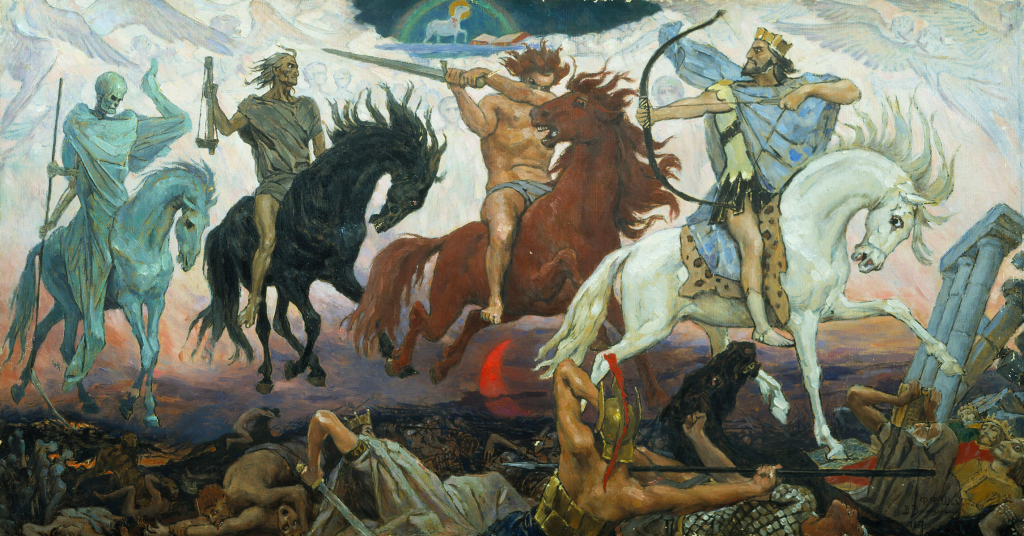
The four horsemen of the apocalypse
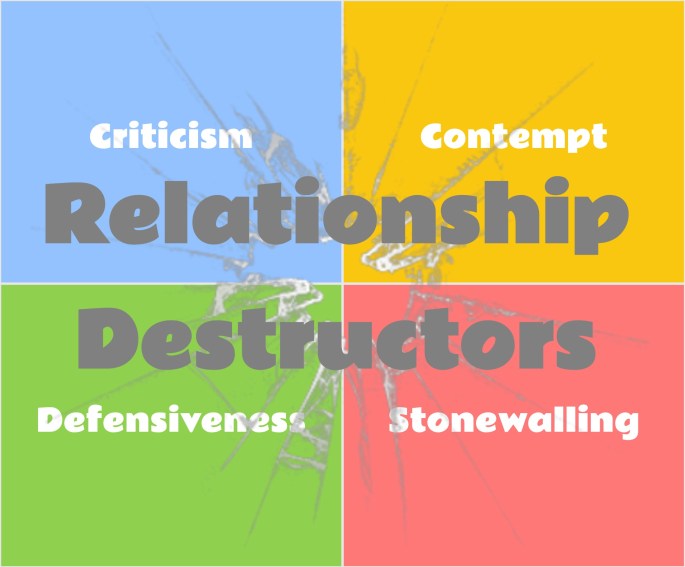
When John Gottman concluded his investigation he detected four destructive behaviors and used four horsemen of the apocalypse analogy. These are:
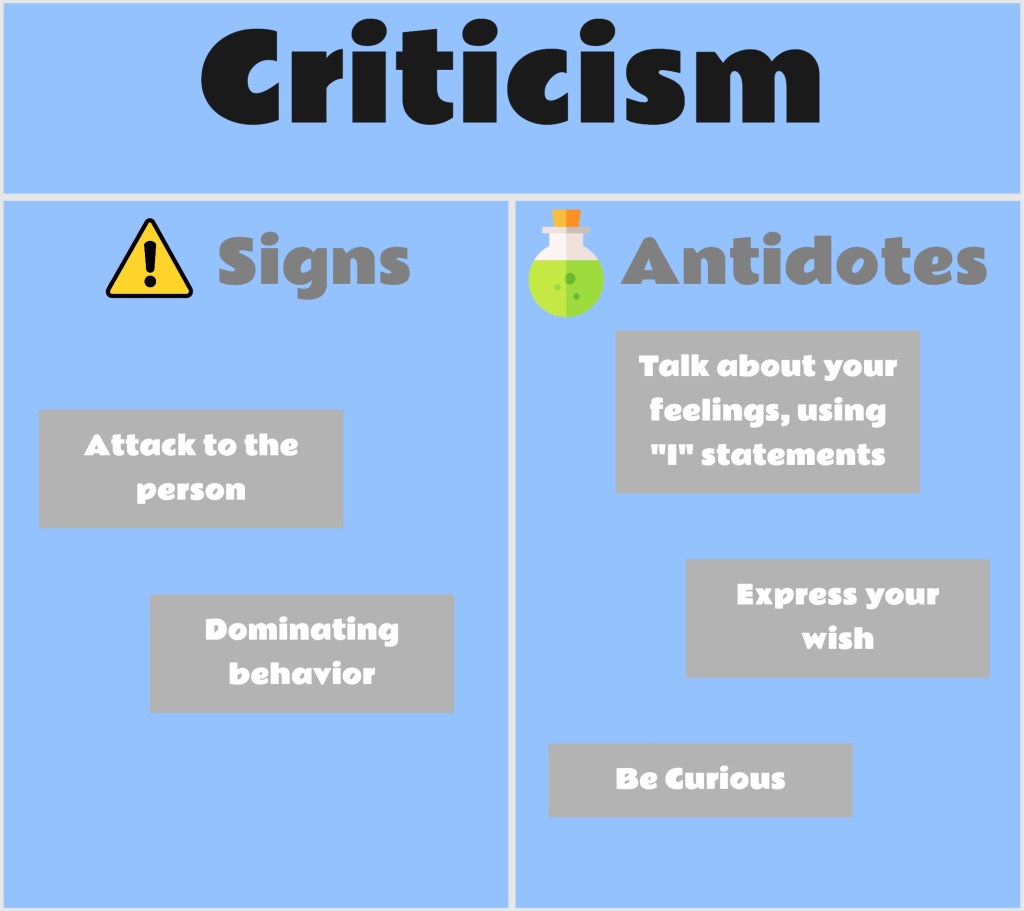
Criticism
“you always <action>”, “you never <action>”, “what is wrong with you?”, sounds familiar? Here we assume there is something wrong with others or other actions, and instead of trying to understand where the undesired behavior came from, or share our feelings, here we finger point the other, which will more likely trigger defensiveness or even another attack rather than actually solving the problem.
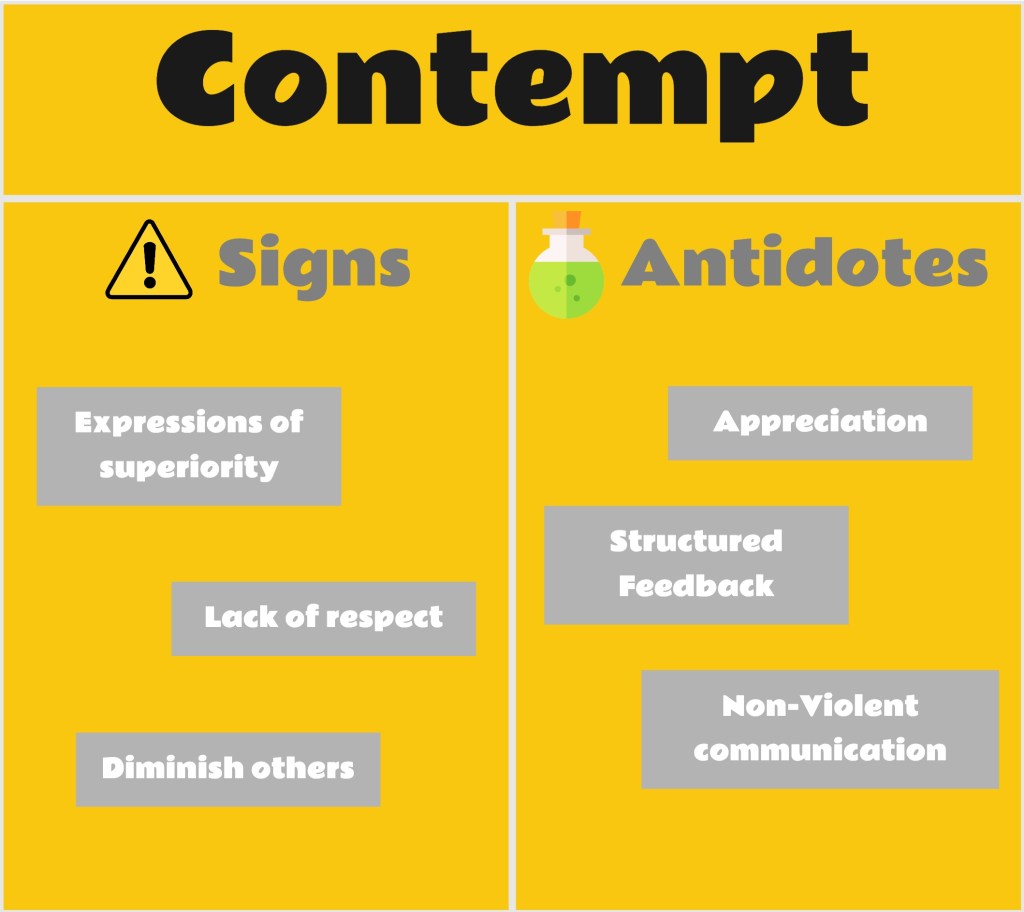
Contempt
Contempt is the king of the destructors as we disrespect the other in all its splendour. With a hostile communication, we diminish the other, making him or her feel less. If the other person has a little self esteem or has a minimal will to express his/her needs, unhealthy conflict will arise with barely chances to reconcile.
Defensiveness
Here we perceive an insult, mistreatment or malice of the other, we feel injustice and we get angry. Good remedies here are be aware of when we are becoming defensive, and start to think of what is the good intention behind, so that we can find another truth besides the one we initially defend.
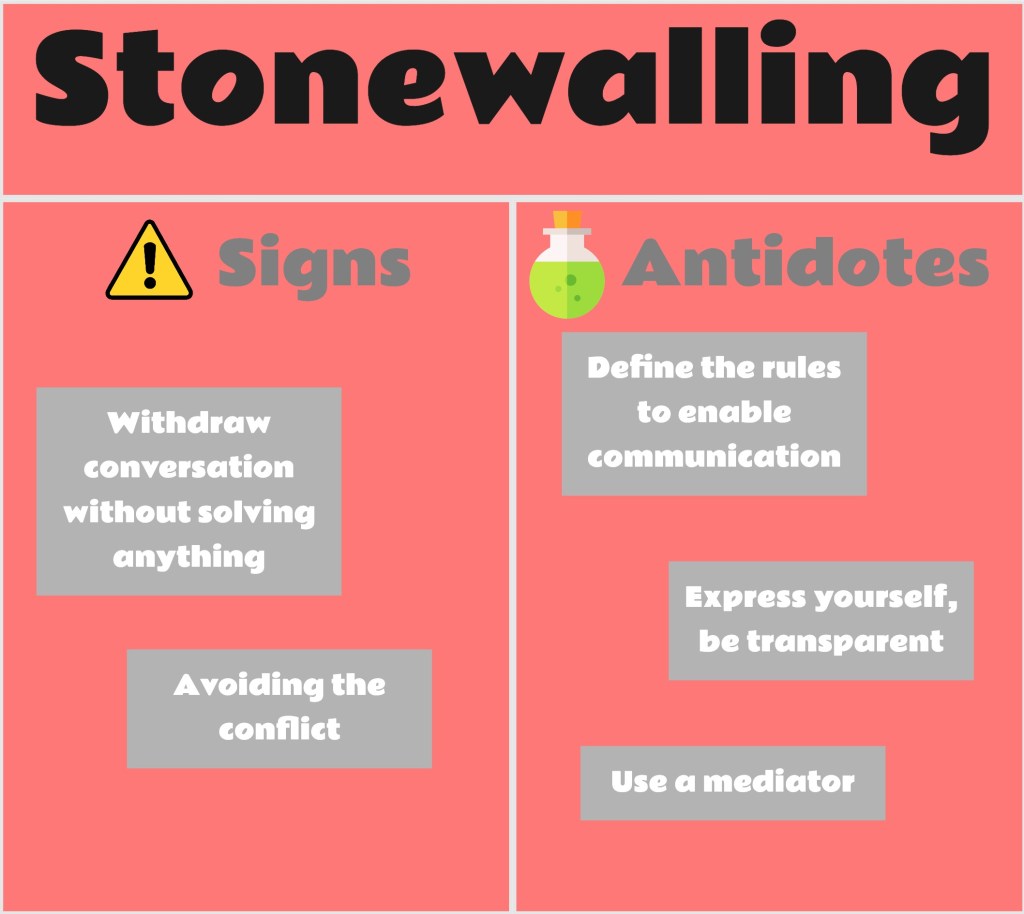
Stonewalling
Stonewalling occurs when the conversation is unfinished or when there is no progress towards a resolution. To prevent it, define the rules that can help you express yourself, what is it that you need to be transparent? if you don’t think you can do it, you can get a mediator too.
AN INTERESTING EXERCISE
We all use to trigger at least one of the four destructive behaviors. An interesting exercise is to do a self-reflection and pick the one that you think you use the most. Then, without sharing your selection, share the four behaviors with someone and ask for feedback. Did you see yourself in the same way others see you? Being aware of it, will already be an important first step.
“There are systems that are unavoidably meant to be destroyed”
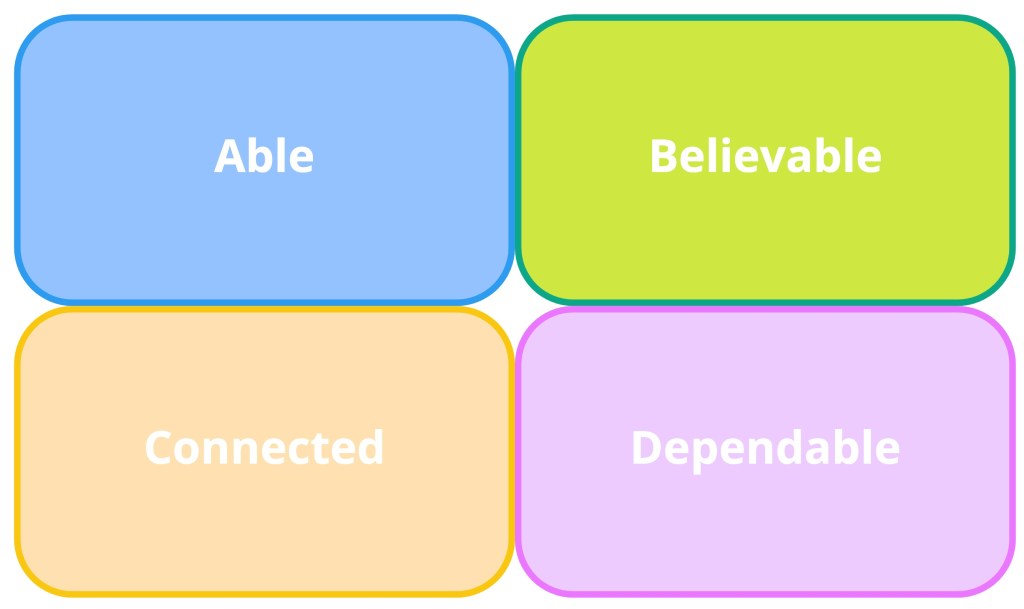
Designed by Ken Blanchard, the ABCD trust model sets out the four elements of trust that are critical to creating and sustaining trustful relationships. They are the following ones:
Able – Demonstrate competence. Leaders who are able earn trust by solving problems, getting results, and using their skills to help others achieve established goals.
Believable – Act with integrity. Leaders who are believable earn trust by being honest and sincere, showing respect for others, keeping confidences, not talking behind people’s backs, and admitting their own mistakes. Connected – Care about others. Leaders who are connected earn trust by showing interest in others, asking for input, listening, showing empathy, praising others’ efforts, and sharing about themselves. Dependable – Maintain reliability. Leaders who are dependable are organized, timely, accountable, and responsive to requests; they do what they say they’ll do and consistently follow up.
Ken believed that by taking care of these 4 key aspects, we’ll be building a trustworthy relationship.
An Application
Personally I come back to the ABCD trust model every time a leader asks for feedback. In fact, we were even using it as part of an assessment tool during my stay at Roche. What we did was to break down each of the elements into 7 questions or statements. Some statements related to ‘connected’ would be:
Listen well
Praise others’ efforts
Show interest in others
Ask for input
In total we had 4 elements x 7 questions per element = 28 questions. If that’s too long for you, you can always cut a few and keep the most relevant statements for each element.
In any case we’ll get to cover the most important aspects for any leader in a relatively short time, therefore the return on investment (ROI) it’s high.
CONCLUSION
As you can see the ABCD Trust Model comes as a powerful and easy to remember tool that can be pulled at any time, responding to important questions that will bring the relationships to the next level.
Want to try it out? If so, if so, please let me know how it goes!
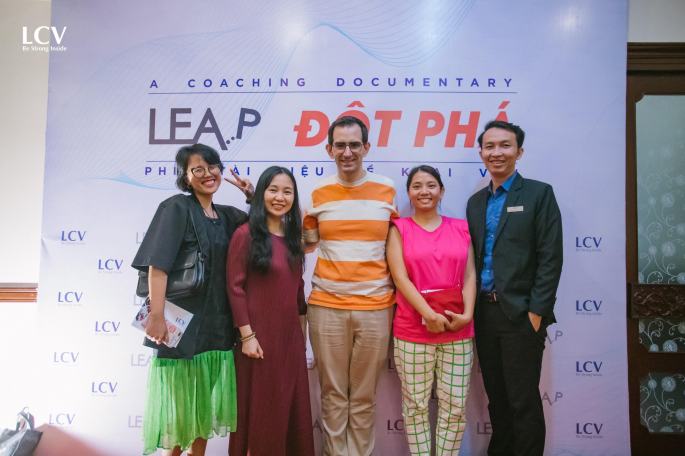
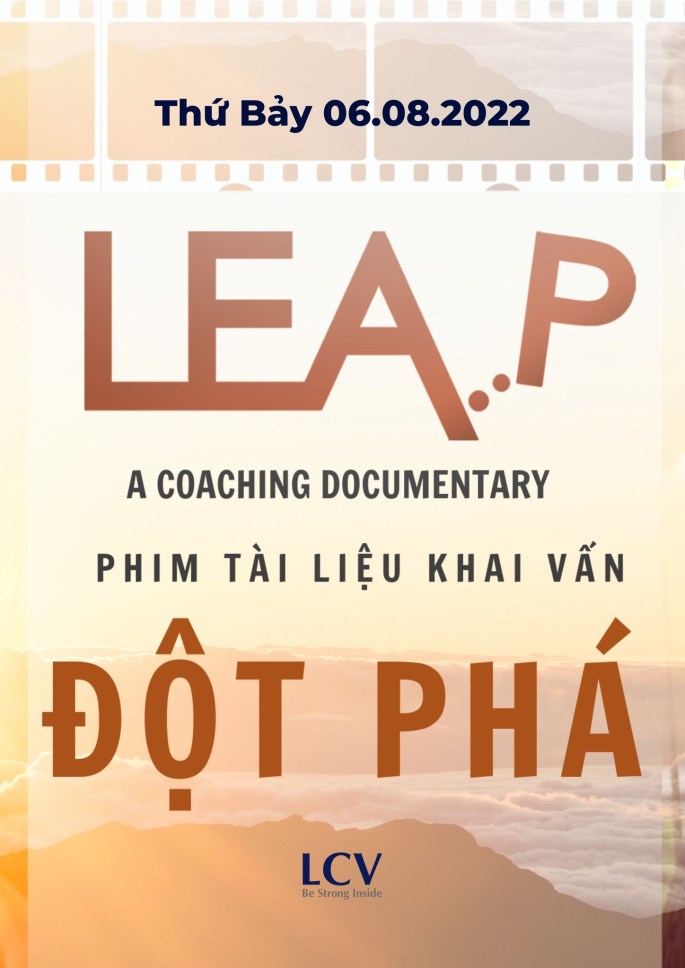
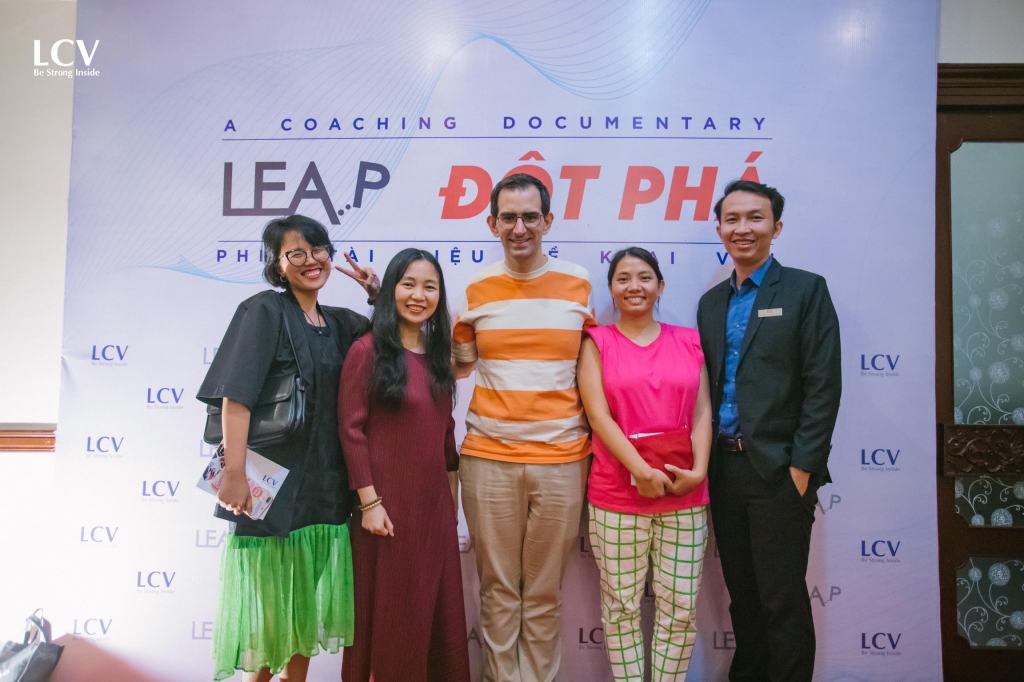
Last week I had the opportunity to attend a coaching event in Ho Chi Minh City (Vietnam). The event was organized by LCV, the leading coaching entity in the city, and the goal was to display a coaching movie documentary named Leap plus have time for a Q&A.
Leap – The Movie
The movie was about 4 people who are accompanied by 37 top coaches over a year. During the movie you can see how each of the protagonists live their coaching process, transitioning to a new phase through powerful questions. Here you can see the trailer:
Some of the questions displayed in the movie were:
If you believe in yourself, what difference would it make?
What does moving towards your goals feels like?
Who is that voice that tells you ‘don’t do that’?
How can you let go of the past?
How can you make peace with what is right now?
What I hear is a defense mechanism. What are you defending?
What for you feels more urgent?
If a miracle happens and you can overcome any challenge, what advice would you give to yourself?
What does “vision” mean to you?
At your last breath in life you are given the opportunity to travel in time and come to you today. What would you say?
When do you want an answer?
You are game changer, what game are you changing?
What is more important, the vision or the fear?
When are you going to stop being afraid?
Are you willing to do whatever it takes to make that vision reality?
What do you need to change in order to succeed?
In what direction would you pursue that ___ ?
What is your greatest fear?
What do you need to forgive?
If it’s not now, when?
What is this <action> gonna mean for you?
What is the intent? Make it better!
What do you need to go to the next level?
Besides that questions, there were a few memorable moments like when the coaching uses the ho’oponopono practice, explained in more detail here, or when the coaches change their hat to the consultant or mentoring role to give a better guidance to the coachees once in action.
One of the quotes during the movie was:
“Confidence grows when you take a risk and you survive”
To be honest, it was a lot of fun! 🙂
Q&A
In the Q&A the leaders clarified in what circumstances it can be interested to mix roles such as coaching, mentoring and consultancy. They also remarked the effects of coaching embodiment over time. The more they were coaching and listening, the less of speakers they became, and more authentic they were in their daily life.
“Be blind, my friend.”
Summary
It was a great opportunity for me to get to live the coaching vibe in Vietnam. As expected, I could spot some cultural differences, at the same time I could see no difference when it comes to the essence of coaching, based on curiosity and empowerment. Looking forward to learning more about LCV and LCV coaches.
Special thanks to my friend and coach Ly Luu, for inviting me to the event and being an excellent translator.





 Xavier Figueras